Vera Hartmann · 21 October 2026
Publishing Platforms Track Novile Submission Patterns in Nonfiction Hybrid Forms Across Scandinavian Markets
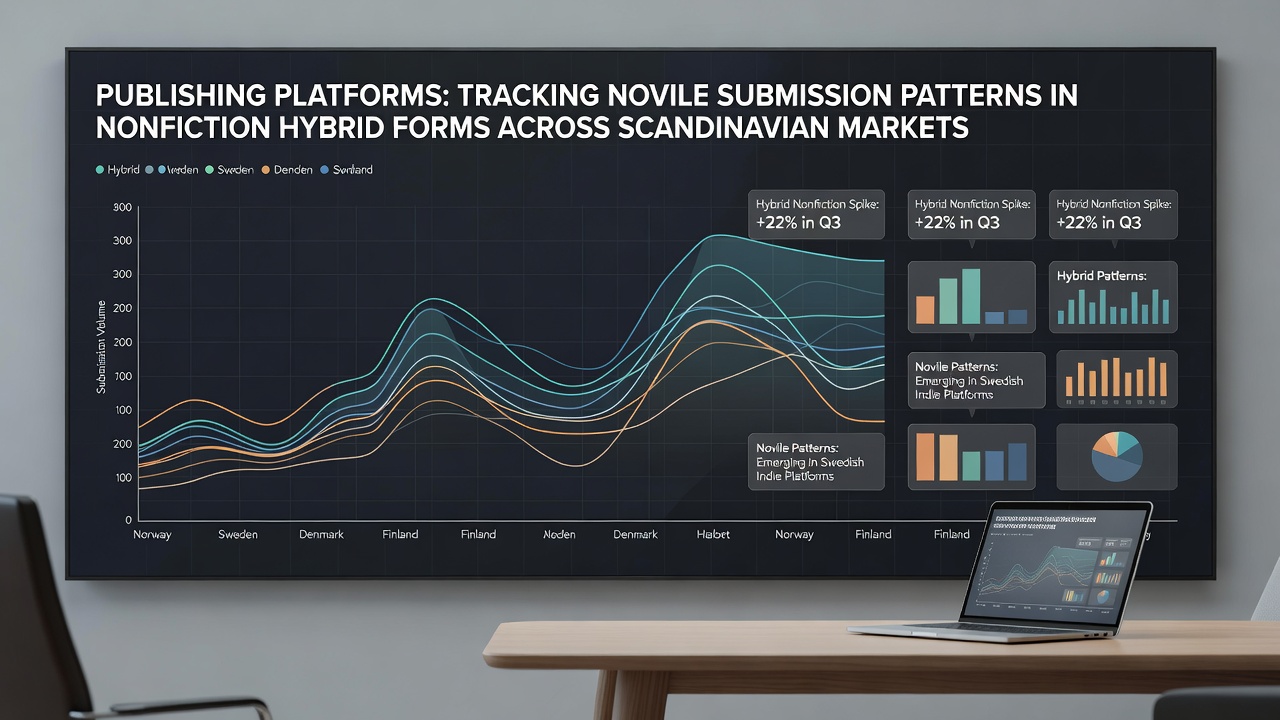
Publishing platforms across Scandinavia have expanded their analytics tools to monitor submission patterns for novile works that blend nonfiction elements with hybrid narrative structures, and data collected through October 2026 shows steady growth in these categories from authors in Denmark, Norway, Sweden, Finland, and Iceland. These platforms record details on genre combinations, word counts, thematic focuses, and author demographics while processing thousands of manuscripts each quarter, which allows them to identify shifts in how writers construct memoir-infused essays, investigative reportages mixed with personal reflection, and other composite forms.
Platform Analytics Reveal Submission Volume Increases
Submission volumes for nonfiction hybrid noviles rose by 18 percent in the first nine months of 2026 compared with the same period in 2025, according to aggregated figures released by major Scandinavian digital publishing services. Platforms sort incoming files by metadata tags that mark hybrid content, and algorithms flag patterns such as repeated use of fragmented timelines or integration of archival documents within personal accounts. Those who've examined the datasets note that Norwegian and Swedish authors contribute the largest share of hybrid novile submissions, while Danish and Finnish writers show higher rates of experimental structure within the same category.
One study released by the Nordic Council of Ministers documented how these platforms categorize submissions by combining keyword analysis with structural mapping software, and the resulting reports highlight a preference for themes that address migration histories, environmental adaptation, and generational memory across the region. Platforms then share anonymized trend summaries with literary agencies and university writing programs, which use the information to adjust curriculum offerings and mentorship priorities.
Regional Differences Shape Content Preferences
Norwegian platforms record elevated interest in noviles that incorporate Sámi oral traditions into contemporary nonfiction frames, whereas Swedish services observe more submissions that merge climate data visualizations with autobiographical segments. Finnish platforms track a distinct uptick in hybrid works that combine historical court records with present-day family narratives, and Icelandic services note submissions that blend volcanic geology descriptions with personal travel accounts. These regional distinctions emerge clearly when platforms cross-reference submission metadata with author location data, which creates maps that illustrate how local publishing ecosystems influence hybrid form development.
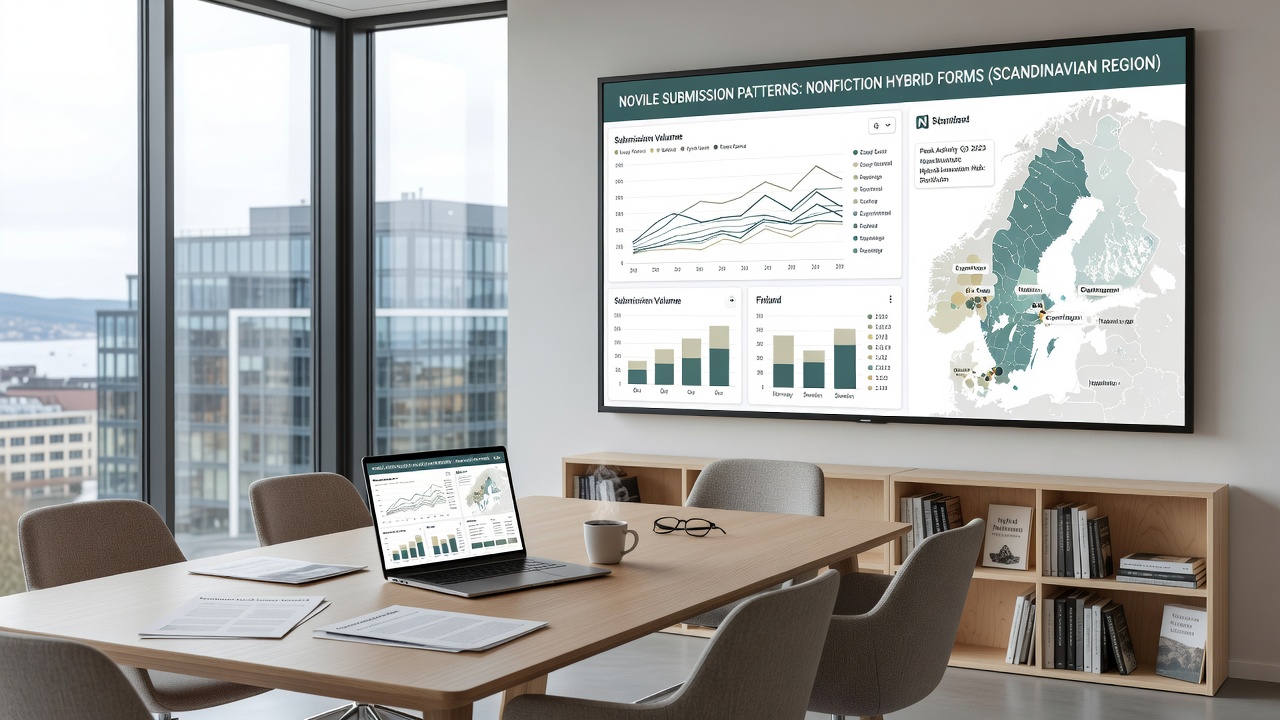
Researchers at the University of Helsinki compiled platform data that shows hybrid nonfiction noviles submitted from Finland contain higher percentages of bilingual text than those from other countries, and the same analysis reveals that Icelandic submissions more frequently include embedded audio transcripts of oral histories. Danish platforms meanwhile document a pattern where authors integrate public health statistics into personal health memoirs at rates double those recorded in 2024.
Technology Behind Pattern Detection
Modern submission portals employ machine learning models trained on previous years of accepted and rejected manuscripts, and these models score new entries for structural similarity to established hybrid forms. The systems flag outliers that combine unexpected elements, such as legal case files woven into travel writing, and route those manuscripts to specialized editors for review. Platform operators update the training datasets quarterly to reflect emerging trends, which keeps the detection tools aligned with evolving author practices across Scandinavia.
Industry reports from the Swedish Publishers Association indicate that this tracking process reduces average review times by 22 percent because editors receive pre-sorted batches organized by thematic cluster and structural type. The same reports note that platforms now export compliance data to cultural funding bodies, which use the statistics to allocate grants supporting hybrid nonfiction projects in underrepresented languages.
Conclusion
Scandinavian publishing platforms continue to refine their tracking systems for nonfiction hybrid novile submissions, and the resulting datasets provide concrete measures of how authors in each market adapt narrative techniques to address shared regional concerns. Continued collection of submission metadata through late 2026 and beyond will supply further detail on evolving patterns, while maintaining the objective record of how these hybrid forms develop across national boundaries.